

Welcome to our Remote Sensing and GIS Blog.
Welcome to the Swift Geospatial Earth Observation Blog – your go-to space for insights into the ever-evolving world of geospatial technology. This earth observation blog is designed to bring clarity and understanding to the current issues shaping the fields of GIS, satellite imagery, and the practical applications of Earth monitoring.
Whether you’re a seasoned professional or just starting out, our earth observation blog will explore the tools, trends, and techniques that are changing how we see, analyse, and respond to the world around us.

Monitoring Illegal Mining: Stopping Losses Before They Escalate
Swift Geospatial combines Planet’s daily 3m satellite imagery with advanced change detection technology to deliver near real-time monitoring of illegal mining. This solution enables early detection, rapid response, and reliable evidence for enforcement, protecting resources, reducing environmental damage, and cutting financial losses. Scalable for single sites to national coverage, it provides security companies, mining operators, and government agencies with the actionable intelligence needed to prevent illegal operations before they escalate.
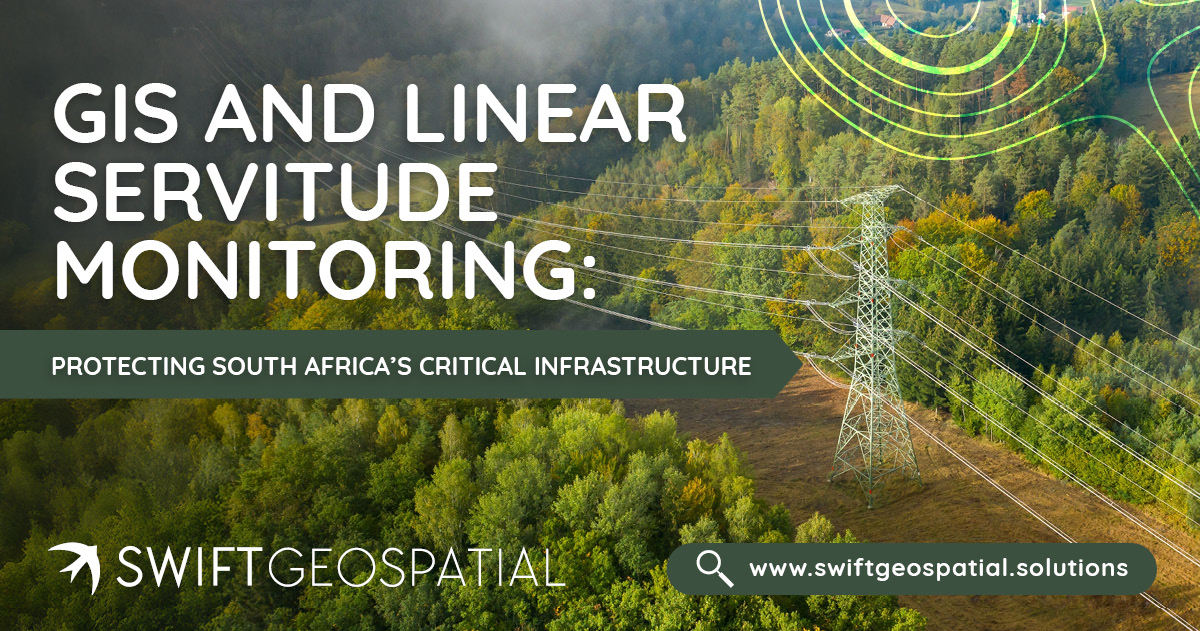
GIS and Linear Servitude Monitoring: Protecting South Africa’s Critical Infrastructure
Encroachment into linear servitudes is a growing risk for South African infrastructure. Swift Geospatial’s GIS monitoring solutions help detect unauthorised activity early, maintain legal compliance, and protect critical assets across powerlines, pipelines, railways, and fiber networks.
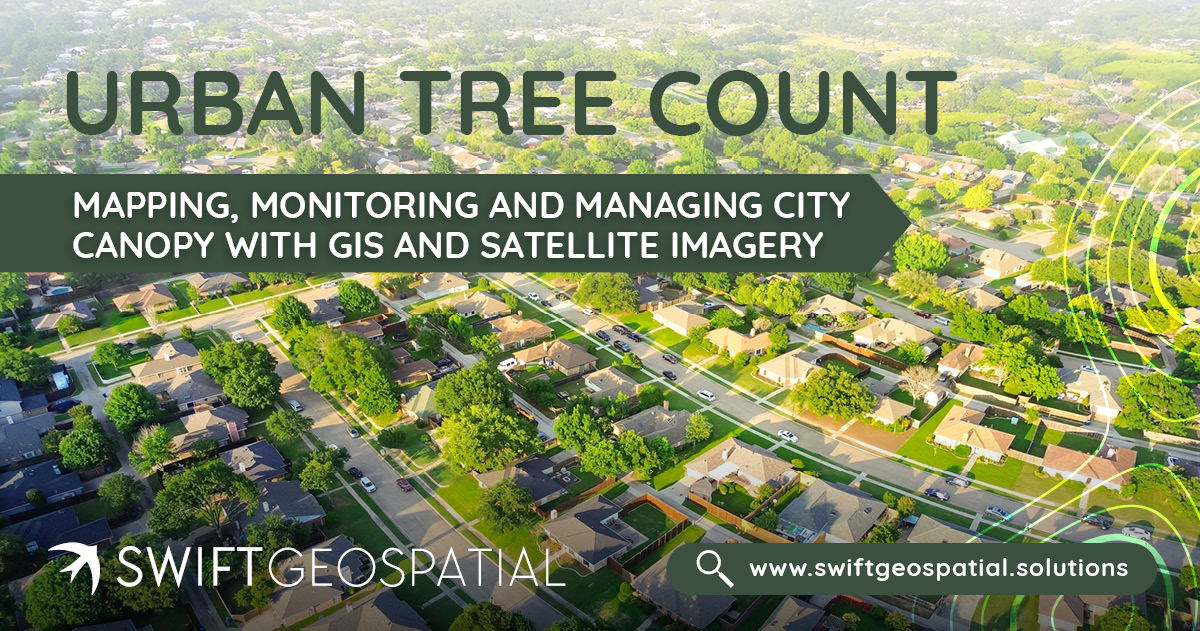
Urban Tree Counting
Urban tree count is becoming essential for modern cities. This article explains how GIS and satellite imagery help track, monitor and manage urban forests at scale.

Silviculture and Forestry Monitoring: Using Earth Observation to Shape the Future of Commercial Forestry
Silviculture is essential to commercial forestry, but when paired with Earth Observation and GIS, it becomes a powerful tool for precision forestry monitoring and sustainable forest management. Swift Geospatial helps forestry teams make better decisions, track regeneration, and ensure long-term forest health across Africa. Let me know if you'd like a shorter version for newsletter previews or social sharing.

Commercial Forestry in Africa
Africa’s commercial forestry sector supports rural livelihoods, drives exports, and promotes sustainable land use. With growing global demand for certified timber, effective monitoring is essential. Swift Geospatial provides satellite and GIS-based tools to help forestry managers track growth, assess forest health, and optimise operations, ensuring plantations remain productive, sustainable, and competitive.

GEO Global Forum 2025
We’re proud to share that Michael Breetzke is representing South Africa as part of the official delegation at the GEO Global Forum 2025 in Rome, and will be speaking during Thursday’s GEO-20 Plenary – Session 7: Strengthening Private Sector Engagement to Deliver on GEO’s Vision.

Watching the Wall: Why Tailings Storage Facility Monitoring Can’t Be an Afterthought
Tailings Storage Facilities (TSFs) are among the most critical, and potentially dangerous, structures in mining. With several major disasters in recent history, mine owners must prioritise TSF monitoring to protect lives, land, and operations. In this post, Swift Geospatial explores how satellite technology provides a smarter, safer, and more cost-effective alternative to traditional aerial flyovers, delivering early warnings and consistent data, no matter how remote the site.
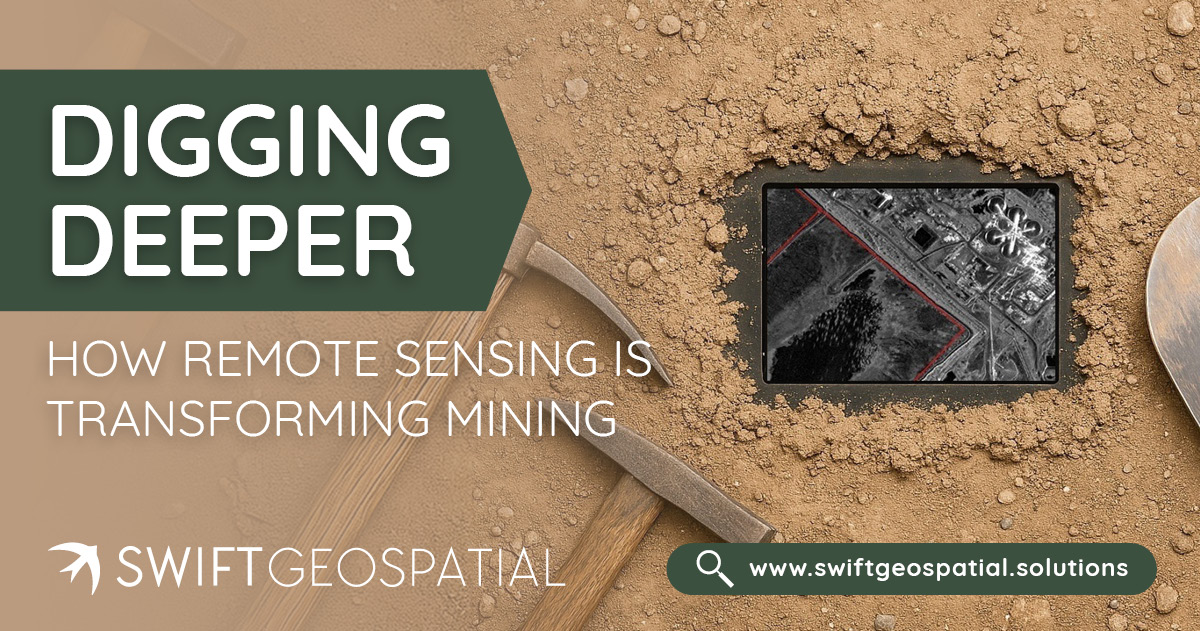
Digging Deeper: How Remote Sensing Is Transforming Mining
Remote sensing for mining has reshaped how mine owners manage exploration, safety, and sustainability. From detecting illegal mining activity to monitoring environmental compliance and pit expansion, satellite data and geospatial analysis offer unparalleled visibility, without ever setting foot on site. Learn how Swift Geospatial helps mining operations across Africa stay compliant, efficient, and ahead of the curve.

The Basics of Spectral Bands: NIR, SWIR, and RGB
Understanding spectral bands like NIR, SWIR, and RGB is essential for making the most of satellite imagery. While RGB provides true-color visuals, NIR is crucial for vegetation analysis, and SWIR helps with mineral mapping and wildfire monitoring. Learn how these bands work together to offer deeper insights into Earth's surface and environmental changes.