Miombo Woodlands: Africa’s Quiet Giant and Why Understanding Them Matters More Than Ever
The Miombo Woodlands stretch across much of southern and central Africa, quietly supporting biodiversity, livelihoods, and climate balance. Often overlooked, these dry forests hold significant biomass and play a crucial role in carbon storage. Understanding how they function, and how they are changing, is becoming increasingly important as pressure on these ecosystems continues to grow.
Categories:
Date Posted:
March 31, 2026
The Miombo Woodlands Explained: Africa’s Most Overlooked Ecological Powerhouse
Stretching across a vast belt of southern and central Africa, the Miombo Woodlands form one of the continent’s most expansive yet underappreciated ecosystems. They don’t command attention in the same way tropical rainforests do, nor do they carry the global spotlight of the Amazon or the Congo Basin. Yet, despite this relative anonymity, they quietly support livelihoods, regulate climate systems, and shape entire regional economies in ways that are both subtle and profound.
If you were to zoom out on a satellite map, you would start to appreciate their sheer scale. Zambia, Mozambique, Tanzania, Zimbabwe, Angola, and parts of Malawi and the DRC are all connected by this broad ecological corridor. It is less a single forest and more a living system, one that shifts with the seasons and responds to environmental pressure in ways that are not always immediately visible. And that is precisely what makes it so important. The most critical changes are often the hardest to see.

What Exactly Are the Miombo Woodlands?
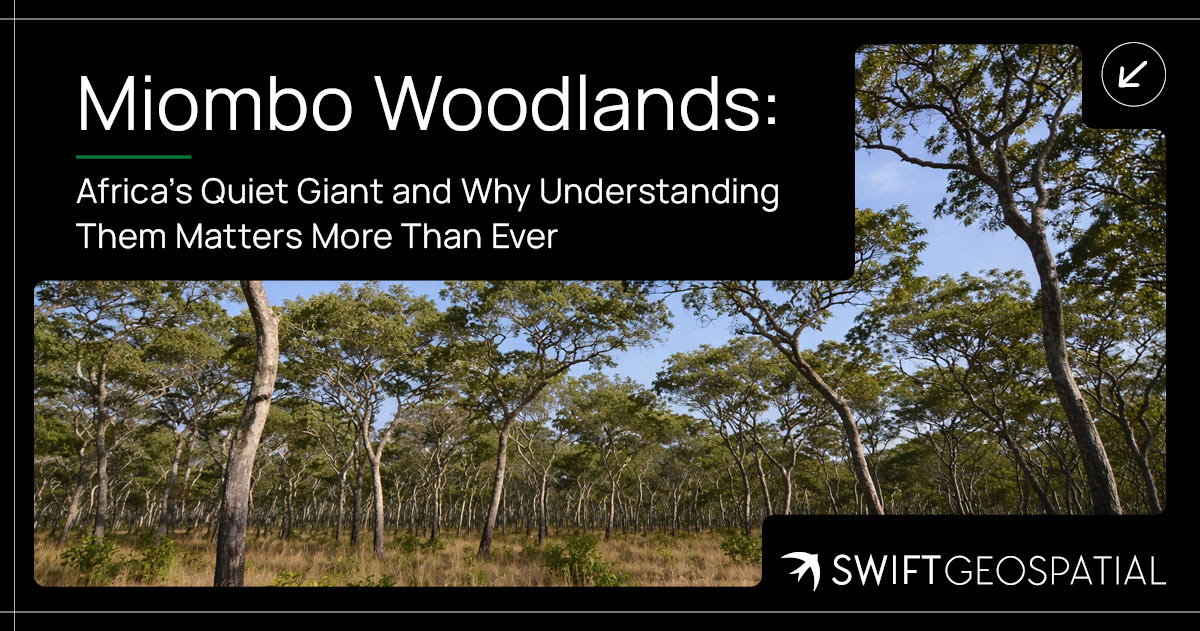
To understand the significance of the Miombo Woodlands, it helps to start with what they are not. These landscapes are often mistaken for dense, tropical forests, but in reality, they are open, dry woodlands defined by a very different ecological structure. Dominated by tree species such as Brachystegia, Julbernardia, and Isoberlinia, the Miombo ecosystem is shaped by long dry seasons and variable rainfall, which influence everything from tree spacing to canopy density.
During the rainy season, the woodlands take on a lush, almost deceptive richness, with thick green foliage and active biodiversity. As the dry season settles in, however, many of the trees shed their leaves to conserve water, creating a more open and sparse appearance. This seasonal transformation is not a sign of weakness but rather a highly effective survival mechanism, allowing the ecosystem to endure conditions that would challenge more water-dependent forest systems.
That said, this resilience should not be mistaken for invulnerability. The same characteristics that allow Miombo woodlands to adapt to natural variability also make them particularly sensitive to sustained human pressure.

A Landscape That Carries More Than It Shows
At first glance, the Miombo Woodlands might appear modest, especially when compared to denser forest systems, but their ecological and socio-economic value runs far deeper than their appearance suggests. These woodlands support a remarkable diversity of plant and animal life, including large mammals such as elephants and antelope, alongside a wide range of bird and insect species. Many of these species are endemic, meaning they are uniquely tied to this environment.
Beyond biodiversity, the Miombo region plays a central role in supporting human livelihoods. It is estimated that around 100 million people rely on these woodlands for essential resources, including fuelwood, charcoal, timber, wild foods, and medicinal plants. In many rural areas, the woodland is not simply a natural backdrop but a foundational part of daily life and local economies.
From a climate perspective, the importance of the Miombo Woodlands becomes even more pronounced. Although they are less dense than tropical rainforests, they store significant amounts of carbon within their vegetation and soils. This makes them an important, if often overlooked, component of regional and global climate regulation. When these systems remain intact, they function as carbon sinks, but when they degrade, even gradually, they begin to release stored carbon back into the atmosphere.
The Subtle Threats No One Notices at First
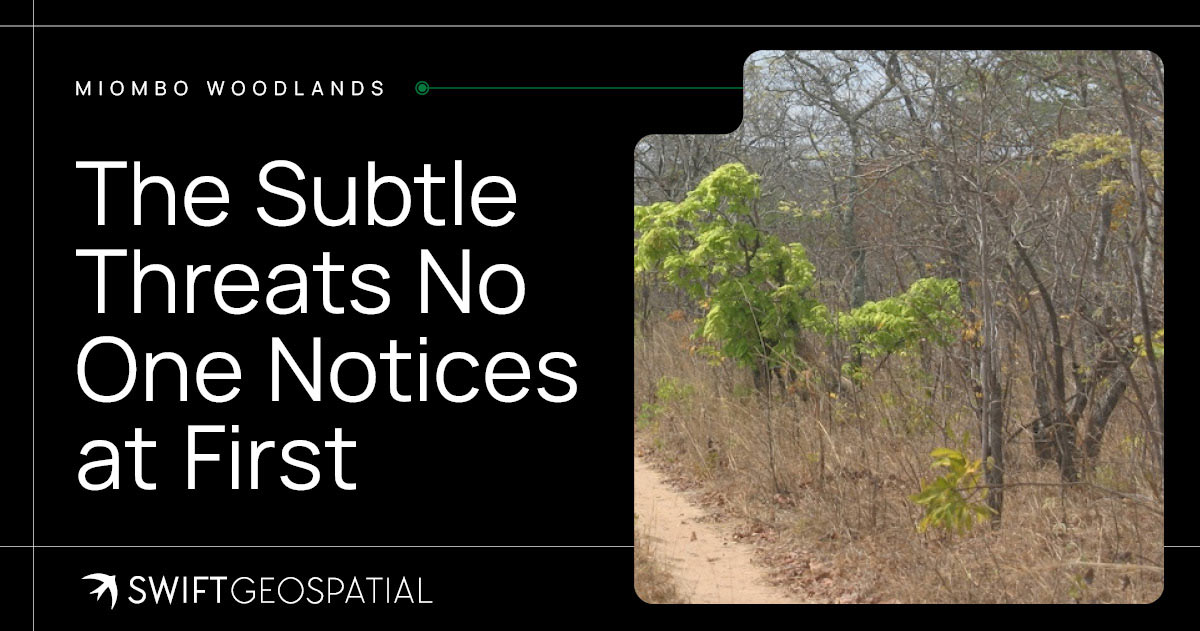
One of the more complex challenges facing the Miombo Woodlands is that degradation does not always present itself in obvious ways. While large-scale deforestation for agriculture and development is certainly occurring, a significant portion of the damage happens incrementally through activities such as selective logging and charcoal production.
In many cases, tree cover remains visible, and from a distance, the woodland may appear largely unchanged. However, the density and structure of the vegetation are often being reduced over time, which has a direct impact on ecosystem health and carbon storage capacity. This kind of gradual degradation is particularly difficult to detect using traditional observation methods, which tend to focus on clear changes in land cover rather than more nuanced shifts in vegetation condition.
As a result, the true extent of environmental pressure in the Miombo region is frequently underestimated, creating a gap between what is seen and what is actually happening on the ground.

Biomass: The Invisible Metric That Changes Everything
This is where the concept of biomass becomes essential to understanding the Miombo Woodlands in a more meaningful way. Biomass refers to the total mass of living vegetation within a given area, including trees, shrubs, and organic matter, and serves as a key indicator of ecosystem health.
What makes biomass particularly valuable is its direct relationship with carbon storage. Higher biomass levels generally indicate greater carbon sequestration, while reductions in biomass signal a loss of stored carbon and, by extension, a weakening of the ecosystem’s ability to regulate climate.
Importantly, biomass also reveals forms of degradation that might otherwise go unnoticed. A woodland can maintain its overall canopy cover while experiencing a significant reduction in volume and density, which affects both biodiversity and ecological function. In this sense, biomass provides a more accurate reflection of environmental change than surface-level observations alone.
Reliable biomass data is increasingly important for informing climate policy, supporting conservation initiatives, and enabling access to climate finance mechanisms such as REDD+. Without accurate measurement, efforts to manage and protect the Miombo Woodlands risk being based on incomplete or misleading information.
Why Measuring Biomass Is Harder Than It Sounds
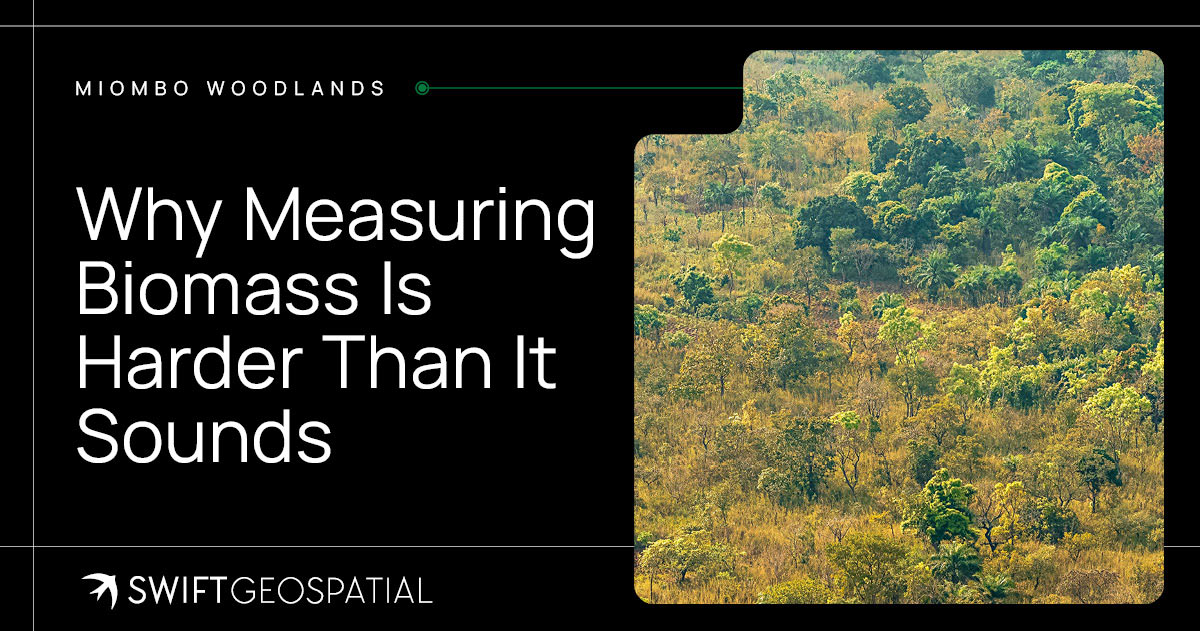
Measuring biomass across such an expansive and dynamic landscape is no small task. Traditional methods rely heavily on field sampling, where teams collect detailed measurements of tree size and density within specific plots. While this approach provides valuable insights, it is time-intensive and difficult to scale across millions of hectares.
Advances in remote sensing and geospatial technology are beginning to change this. High-resolution satellite imagery, combined with machine learning models, allows for broader and more consistent analysis of vegetation patterns. These technologies can detect subtle changes in canopy structure, track seasonal variations, and identify long-term trends in biomass that would otherwise be difficult to capture.
This shift from localised sampling to large-scale observation represents a significant step forward in how the Miombo Woodlands are understood and managed, offering a more comprehensive view of changes as they occur over time.
A Quiet Turning Point for African Landscapes
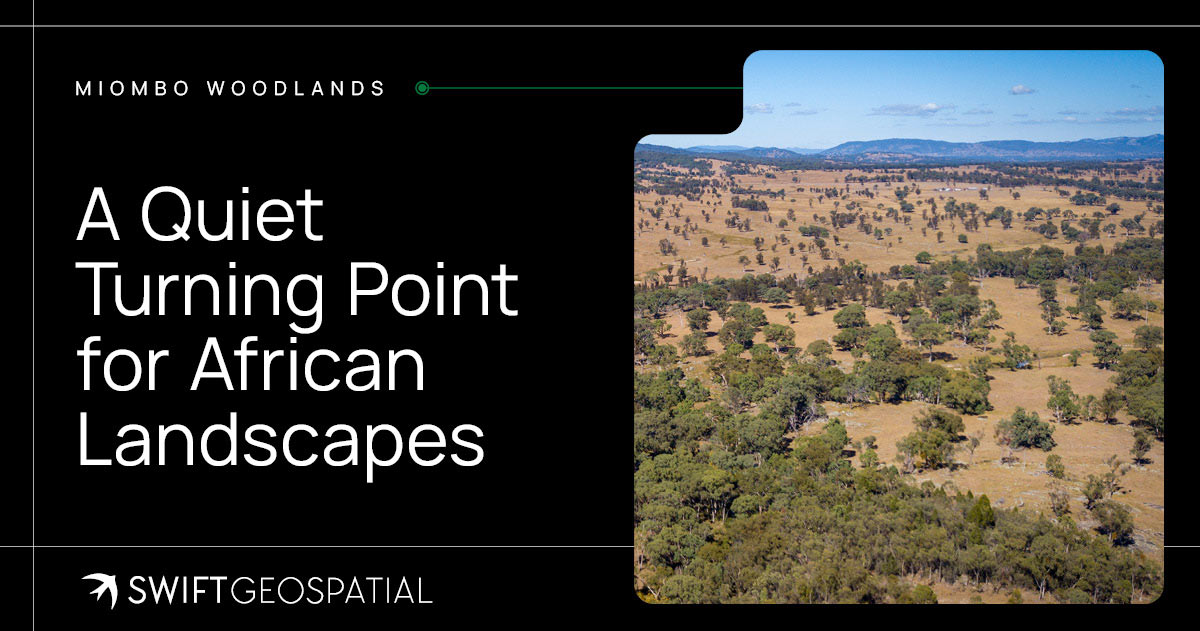
The Miombo region is currently facing a convergence of pressures that make its future uncertain. Population growth continues to drive demand for land and natural resources, while energy needs sustain high levels of charcoal production. At the same time, agricultural expansion is steadily reshaping large portions of the landscape.
Parallel to these challenges is a growing emphasis on environmental accountability, with international frameworks placing increased importance on traceability, carbon reporting, and sustainable land management. This creates both pressure and opportunity, particularly for regions like the Miombo Woodlands that hold significant ecological value but remain under-monitored.
The question is no longer whether these landscapes are changing, but how quickly and to what extent.
Seeing the Unseen: Why Monitoring Matters More Than Ever
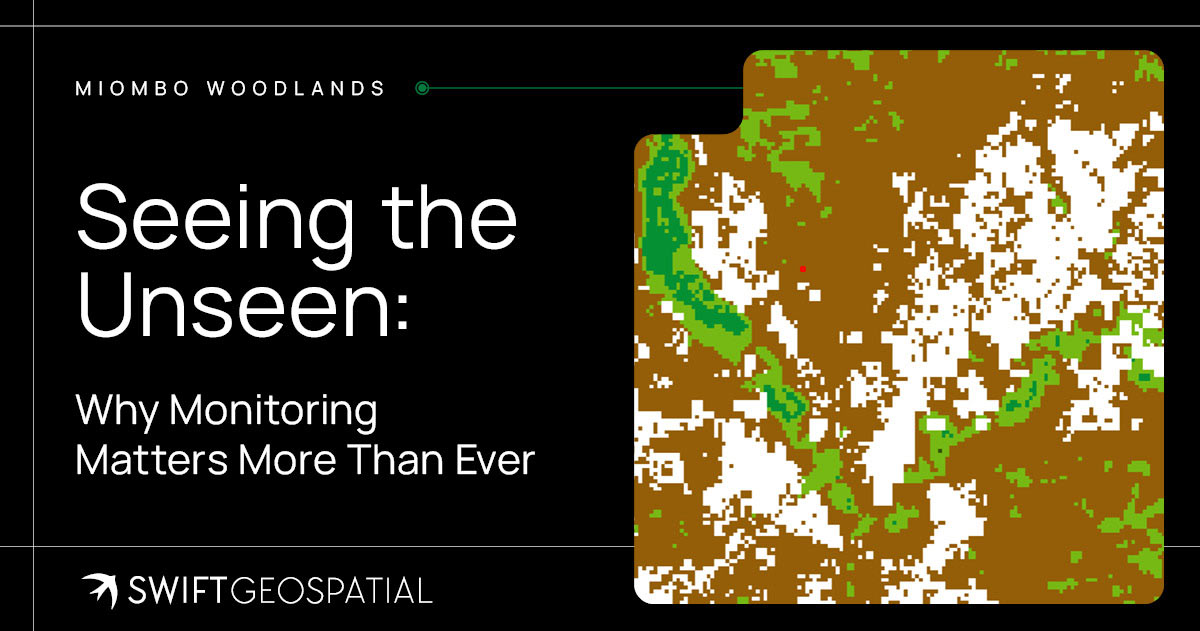
Understanding the Miombo Woodlands requires more than static maps or occasional surveys. It requires continuous insight into how these systems are evolving over time. Monitoring, in this context, becomes a critical tool for building that understanding.
By establishing baseline conditions and tracking changes in biomass and vegetation health, it becomes possible to identify early signs of degradation, assess the effectiveness of conservation efforts, and make more informed decisions about land use. Over time, this kind of visibility allows patterns to emerge, highlighting both areas of concern and areas of resilience.
The ability to observe change as it happens, rather than after the fact, shifts environmental management from reactive to informed. And in a landscape as vast and complex as the Miombo, that shift can make a meaningful difference.
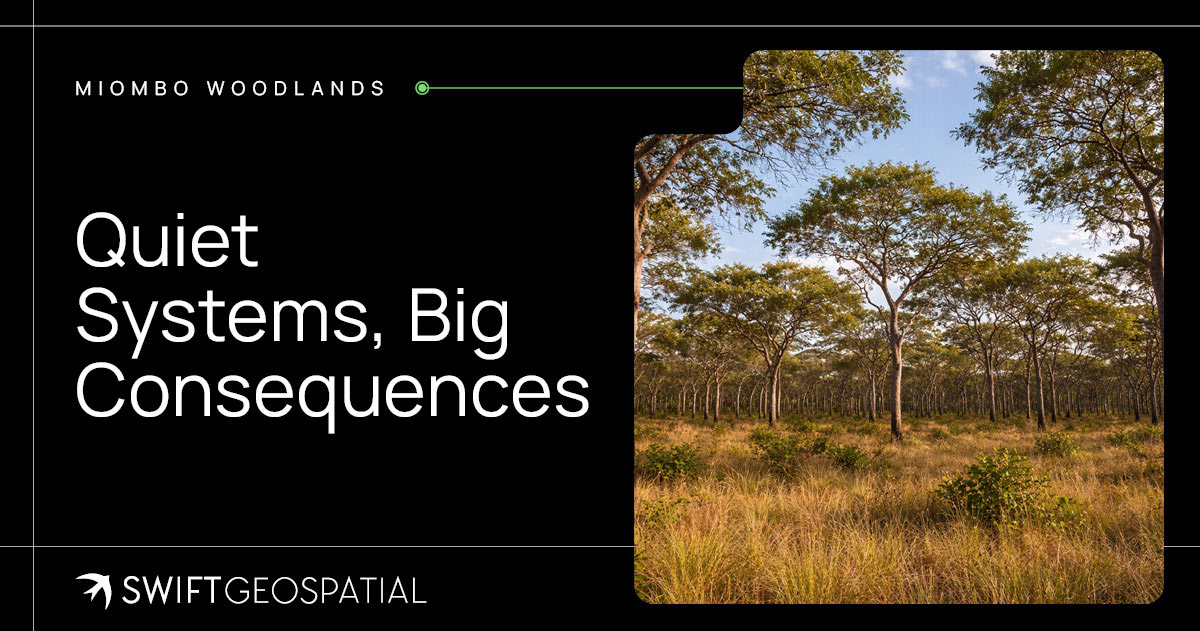
Quiet Systems, Big Consequences
The Miombo Woodlands do not change dramatically overnight. Their transformations are gradual, often unfolding over years rather than weeks or months. This slow pace can make it easy to overlook the cumulative impact of ongoing pressures.
Yet, despite their quiet nature, these ecosystems play a vital role in supporting biodiversity, sustaining livelihoods, and regulating climate across large parts of Africa. Their importance is not always visible, but it is deeply embedded in the systems that depend on them.
Understanding them more fully is not simply a matter of interest, it is a necessity. Because as pressure continues to build, the ability to see, measure, and interpret change within the Miombo Woodlands will increasingly determine how effectively they can be protected for the future.