Agriculture

Using GIS to Support Insurance Risk Management in Commercial Forestry

Swift Geospatial helps insurance providers in forestry and agriculture manage wildfire risk with precision. Using GIS and satellite data, we detect fires in near real time, track their spread, and analyze post-fire damage to deliver verified, actionable insights. From detection to claim validation, our integrated wildfire monitoring solutions give insurers complete clarity, faster assessments, and greater confidence in every decision.

From Satellite to Soil: How Remote Sensing Supports Smarter Agriculture

From monitoring crop health and managing scarce water to tracking pests, forecasting yields, and proving sustainability, satellites are reshaping agriculture. With daily coverage from the Planet Dove constellation, ultra-detailed imagery from Maxar, and Swift Geospatial’s GIS expertise, farmers gain insights that were once impossible to imagine. Remote sensing is bridging the gap between space and soil, creating smarter, more resilient, and more sustainable farming practices worldwide.

The Future of Farming: AI, GIS, and Big Data in Agriculture

Agriculture in South Africa is changing fast. Farmers are moving beyond tradition and using GIS, AI, and satellite imagery to guide smarter decisions. From maize in the Free State to citrus in Limpopo and avocados in Mpumalanga, precision agriculture is helping producers adapt to climate change, cut costs, and improve yields. This article explores how Big Data, crop monitoring, and bespoke GIS solutions are shaping the future of farming across South Africa and the wider African continent.

Transforming Sustainability with Forest Carbon: Powered by Planet, Delivered by Swift Geospatial

Planet’s Forest Carbon is a first-of-its-kind satellite-powered solution that measures and monitors aboveground forest carbon with unmatched accuracy and scale. The product leverages Planet’s high-resolution satellite imagery and advanced deep learning models trained on LiDAR data, providing precise measurements of forest carbon stocks and changes.

The cocoa price hike, its impact on smallholder farmers and EUDR

The cocoa industry is grappling with an unprecedented crisis as cocoa prices skyrocket, doubling since the beginning of the year, as key producing countries in Africa are hard-hit by extreme climate change events, outbreaks of disease impacting crops and financial uncertainty. How have smallholder cocoa farmers been impacted and what can be done to help them? How does the EU Deforestation Regulation factor into this, given that cocoa is listed as one of the high-risk deforestation commodities?

How will the EU Deforestation Regulation impact smallholder farmers?

The European Union Deforestation Regulation (EUDR) implementation deadline is fast approaching on 30 December 2024. Can smallholder farmers rally to meet the regulation requirements while under such time pressure, and facing other challenges such as a lack of financial resources, and technological and regulatory support?

As global demand for soy and cattle increases, how can EUDR and other legislation help prevent negative climate impacts?

In a world where deforestation management and climate conservation are becoming increasingly pressing, soybean production and cattle farming are being spotlighted. Regulations like the European Union Deforestation Regulation (EUDR) and others are helping combat unsustainable soybean and cattle farming practices, but how are they faring as demand for these commodities rises globally?

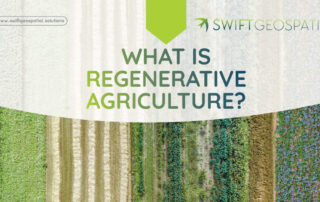
What is Regenerative Agriculture?

The idea behind regenerative agriculture is to create a cycle of life that supports both the plants and the animals on the farm, and also helps the environment around it. For example, healthy soil can store more carbon from the air, which is good for the climate. It can also hold more water, which is good for preventing droughts and floods.

Go to Top