Wyvern: The Future of Geospatial Intelligence with Advanced Satellite Constellation
We're on the brink of a new era in satellite technology, and the Wyvern Constellation is leading the charge. This groundbreaking advancement is set to revolutionize the way we observe and interact with our planet. Whether it’s tracking environmental changes, boosting agricultural efficiency, managing resources, or enhancing national security, Wyvern's high-resolution data is changing the game.
Categories:
Date Posted:
October 16, 2024
Wyvern: The Future of Geospatial Intelligence with Advanced Satellite Constellation
We’re on the brink of a new era in satellite technology, and the Wyvern Constellation is leading the charge. This groundbreaking advancement is set to revolutionize the way we observe and interact with our planet. Whether it’s tracking environmental changes, boosting agricultural efficiency, managing resources, or enhancing national security, Wyvern’s high-resolution data is changing the game. With its Generation 2 satellites—Dragonette-011, Dragonette-002, and Dragonette-003—Wyvern offers us an unprecedented view of the Earth’s surface, packed with detail and precision like never before.
Cutting-Edge Technology and Capabilities
Wyvern’s satellite technology is truly something special. These first-generation satellites come equipped with state-of-the-art hyperspectral imaging, capturing data across a wide range of spectral bands. But this isn’t just any ordinary data; it’s incredibly detailed information that’s vital for a wide variety of geospatial applications.
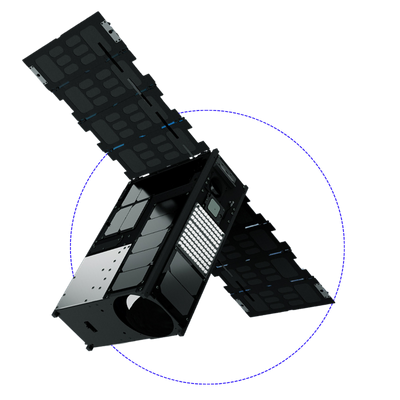
Photo: Wyvern
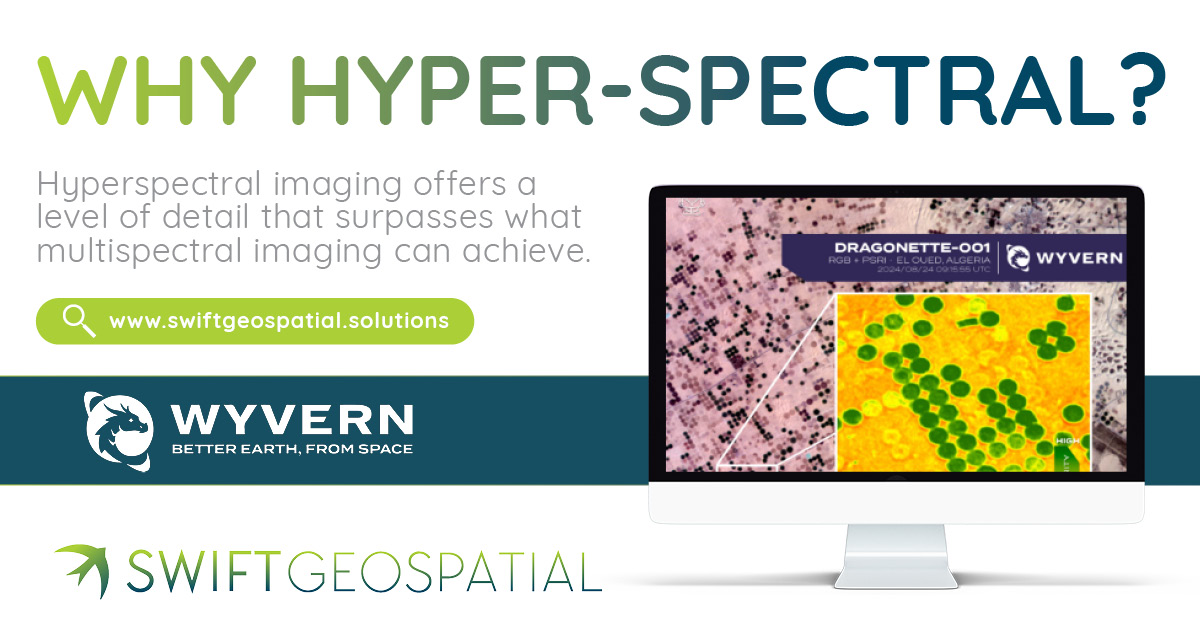
Why Hyperspectral?
Hyperspectral imaging offers a level of detail that surpasses what multispectral imaging can achieve.
While today’s multispectral sensors are widely used to assess risks and guide field operations across various industries, they fall short of delivering a full, detailed picture. With fewer optical bands, multispectral technology limits the depth of data available to distinguish unique environmental factors. This constrains industries such as energy and agriculture from making the precise, timely decisions needed to tackle large-scale global challenges.
Hyperspectral imaging, with its significantly greater number of color bands, reduces spectral mixing and provides higher visibility and resolution into what’s really happening on the ground. It offers logistical benefits too—hyperspectral data is often more compatible with other sensor types, eliminating the need for organizations to overhaul processes or invest in new systems to tap into its potential.
The insights gained from hyperspectral imagery far exceed those of other technologies, making it indispensable for addressing critical issues that require both precision and urgency. Whether it’s mitigating climate change, securing food supplies, or managing defense operations, hyperspectral imaging delivers capabilities unmatched by other approaches.
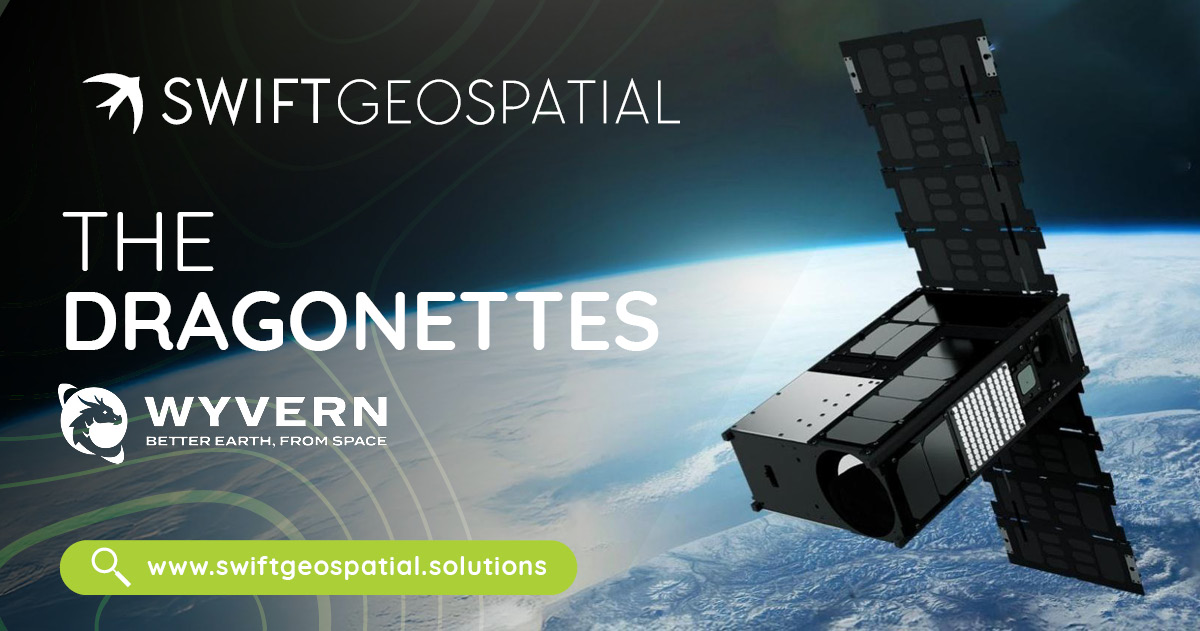
The Dragonettes
The Dragonette constellation consists of five high-resolution hyperspectral satellites designed to deliver advanced Earth imagery. Dragonette-001, -002, and -003 have already been successfully launched, and two more satellites, Dragonette-004 and -005, are scheduled for launch next year. These upcoming satellites are part of our constellation expansion in collaboration with Loft Orbital—learn more about it on their blog.
Currently, Dragonette-001 provides high-quality, 23-band hyperspectral imagery, with additional capacity and even more spectral bands becoming available soon.